
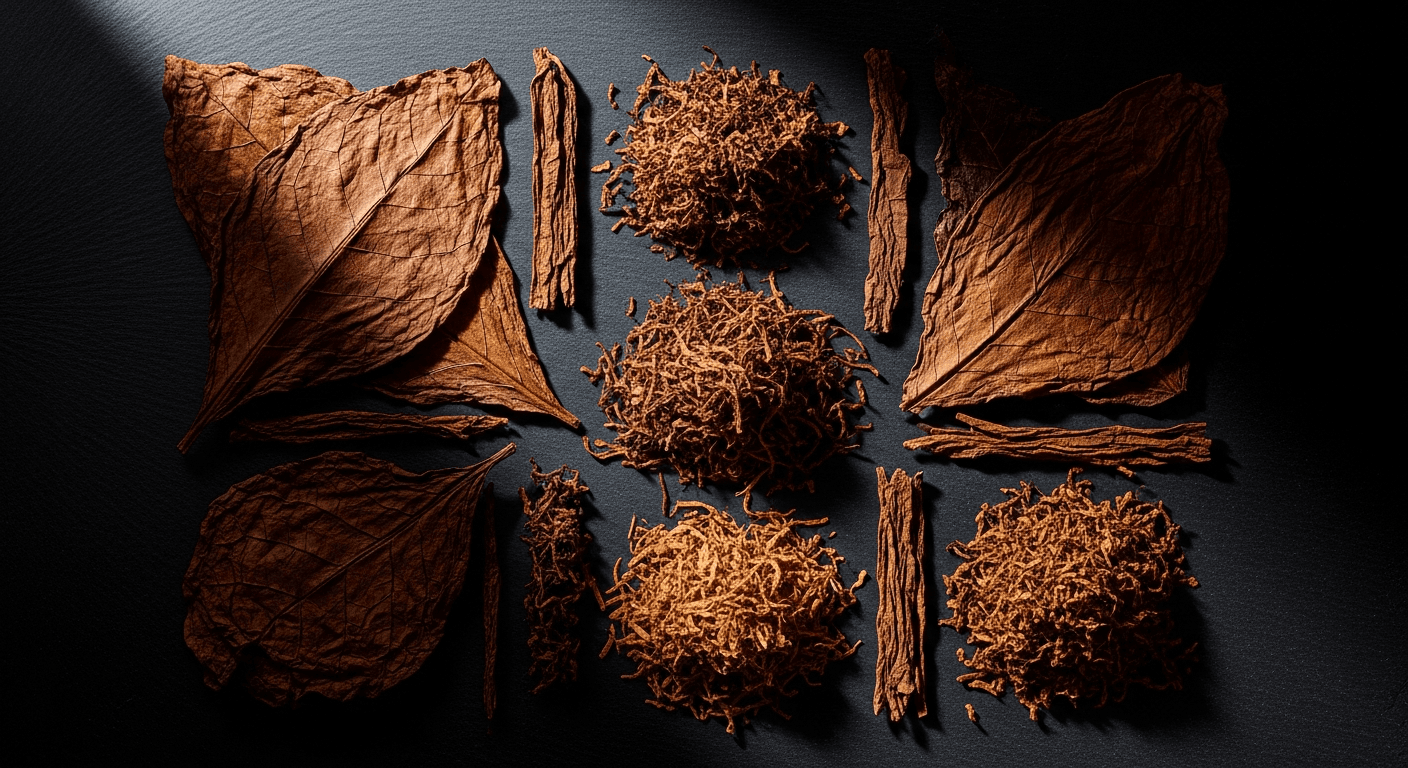
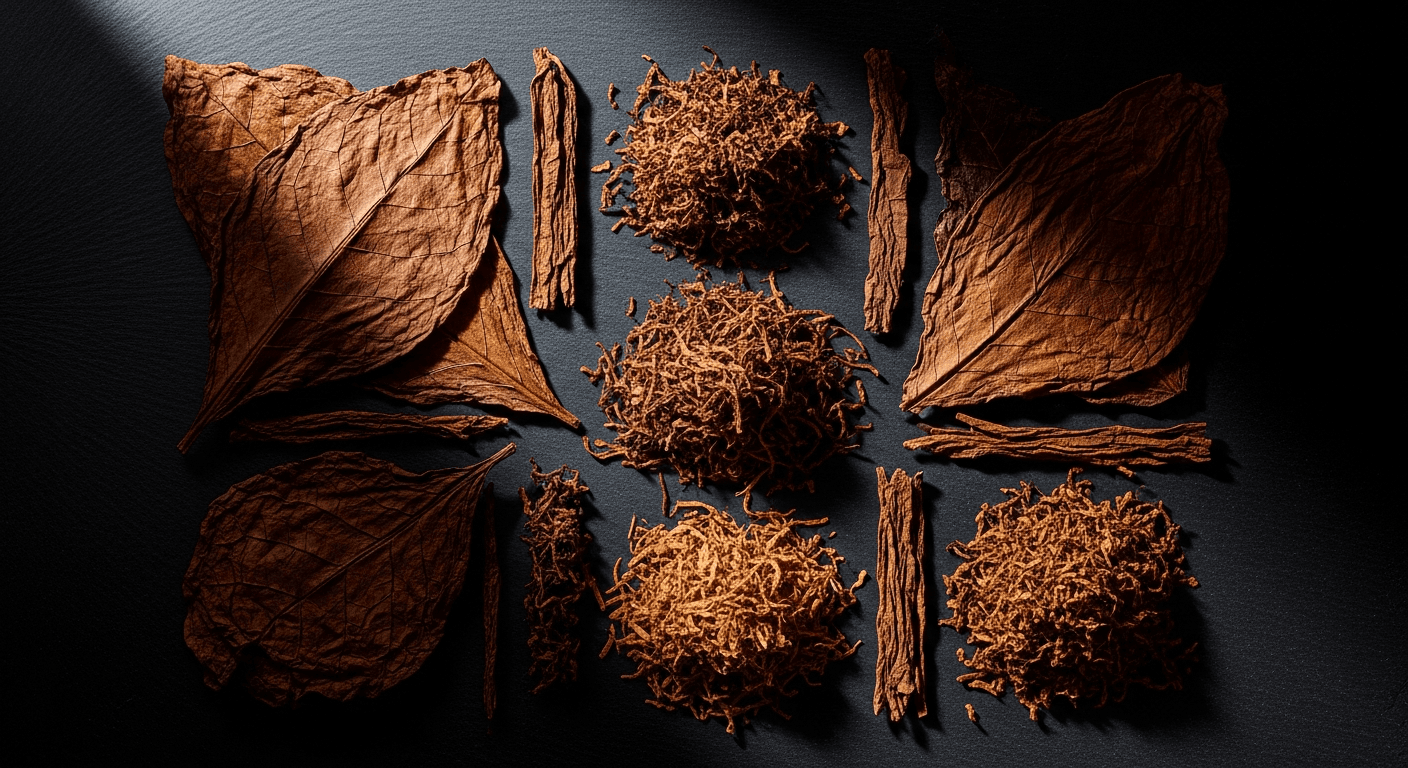
Most smokers have strong preferences — a particular brand, a specific cigarette, a favorite cigar wrapper — without necessarily knowing why that tobacco tastes the way it does. The answer lies in a combination of variety, growing region, curing method, and blending. Understanding these factors makes you a more informed buyer and a more satisfied smoker.
Here's a guide to the major tobacco types you'll encounter, what makes each distinct, and how they end up in the products you actually smoke.
| Tobacco Type | Curing Method | Flavor Profile | Common Uses |
|---|---|---|---|
| Virginia (Brightleaf) | Flue-cured | Light, sweet, clean | American cigarettes, blended pipe tobacco |
| Burley | Air-cured | Earthy, nutty, full-bodied | American blend cigarettes, pipe tobacco |
| Oriental (Turkish) | Sun-cured | Spicy, aromatic, complex | Blend component (Camel, Turkish cigarettes) |
| Latakia | Fire-cured (wood smoke) | Smoky, leathery, incense-like | English-style pipe tobacco blends |
| Criollo / Corojo | Air-cured (wrapper/binder) | Spicy, earthy, rich, oily | Premium cigars (wrapper, binder, filler) |
Virginia (Flue-Cured) Tobacco
Virginia tobacco — sometimes called brightleaf or flue-cured tobacco — is the backbone of the global cigarette industry. It's grown primarily in Virginia, North Carolina, and several international regions, then cured by circulating heat through the barn without exposing the leaves to smoke. The result is a bright, golden leaf with high natural sugar content and a light, slightly sweet flavor.
Virginia tobacco is the dominant variety in most American cigarette blends and lights up easily, burns evenly, and delivers a clean, relatively mild smoke. If you've smoked a Marlboro, a Newport, or most mainstream cigarettes, Virginia leaf was the primary component.
Burley Tobacco
Burley is air-cured rather than flue-cured, which means the leaves are hung in open barns and dried slowly over weeks. This process removes much of the natural sugar, leaving a tobacco with a nutty, earthy, distinctly full-bodied character. Burley absorbs flavorings readily, which is why it's commonly used in American cigarette blends where added flavors and casings are applied during processing.
Burley grows primarily in Kentucky, Tennessee, and surrounding states. It burns slower than Virginia leaf and delivers more nicotine per puff, making it a staple in full-flavored cigarettes and pipe tobacco blends.
Oriental (Turkish) Tobacco
Oriental tobacco is small-leafed and sun-cured, grown in Turkey, Greece, and the surrounding eastern Mediterranean region. It has an intensely aromatic, spicy, and slightly sweet character quite unlike Virginia or Burley. Because of its complexity, Oriental tobacco is almost always used as a blend component rather than smoked on its own.
If you smoke a Camel cigarette, you're tasting a classic American blend: Virginia, Burley, and Oriental tobacco together. That distinctive Camel flavor is largely the Oriental component. Turkish cigarettes — smoked widely in Europe and the Middle East — use Oriental leaf as the primary ingredient and deliver a noticeably different experience than American-style blends.
Latakia Tobacco
Latakia is a specialty tobacco grown in Syria and Cyprus and cured over smoldering wood fires from specific aromatic shrubs. The result is a tobacco with an intensely smoky, leathery, almost incense-like flavor — the most distinctive of any tobacco variety. It's rarely used in cigarettes but is central to many English-style pipe tobacco blends.
If you've smelled a pipe tobacco and thought it was surprisingly pleasant or almost campfire-like, there's a good chance Latakia was in the blend. It's a polarizing tobacco — smokers tend to love it or strongly dislike it — but it's a fascinating one to know about.
Criollo and Corojo Tobaccos
These are the foundational varieties behind premium cigars. Criollo tobacco — sometimes called "Havana seed" — originated in Cuba and has a spicy, earthy character with medium body. Corojo is a related variety developed in Cuba's Vuelta Abajo region, known for producing exceptional wrapper leaves with rich, oily texture and complex flavor.
Most premium cigars you'll find at a smoke shop use Criollo or Corojo-derived tobaccos for some portion of the blend — the wrapper, binder, and filler each contribute differently to the final flavor. Our premium cigar selection includes a range of blends built around these varieties.
Explore at Burn & Brew
We stock premium cigars, domestic and imported cigarettes, and rolling tobacco — all in Crystal City, Arlington.
What affects the taste and aroma of tobacco?
Growing region and soil chemistry are the two biggest factors. Tobacco is extraordinarily responsive to its environment — the same seed planted in different soils produces noticeably different leaf. Soils rich in iron produce tobaccos with stronger, more pungent aromas. A higher calcium-to-magnesium ratio tends toward sweeter, softer flavors. Virginia's sandy, low-nutrient coastal soils are part of what makes brightleaf so clean and mild.
Curing method is the other major variable. Flue-curing (Virginia) produces bright, sweet, high-sugar leaf. Air-curing (Burley) produces darker, earthier, low-sugar tobacco. Fire-curing (used in Latakia and some specialty tobaccos) infuses smoke character directly into the leaf. Sun-curing (Oriental) concentrates aromatic compounds and produces the characteristic spice of Turkish tobaccos.
After curing, blending and casing further shape the final product. Manufacturers mix tobacco types in specific ratios and may apply flavorings, sugars, or humectants during processing. Premium tobacco brands and cigar makers are generally more transparent about their blending than mass-market cigarette companies.
Which tobacco type is right for you?
It depends entirely on what you're smoking and what you value. For cigarettes: if you prefer a light, clean taste, Virginia-dominant blends are your natural starting point. If you want something fuller and more complex, look for American blend cigarettes that include Burley and Oriental leaf. For rolling tobacco, trying different loose-leaf varieties — Virginia, Burley, blends — is the best way to find your preference.
For cigars, the range of flavor is even wider. A mild Connecticut-wrapper cigar with a Criollo blend reads as creamy and subtle; a full-bodied Nicaraguan puro with Corojo throughout is earthy, peppery, and bold. Our team at the shop can help you navigate this based on your current tastes.
Where can I find a wide selection of tobacco products in Arlington, VA?
Burn & Brew at 566 23rd St S in Crystal City, Arlington carries cigars, cigarettes (domestic and imported), and rolling tobacco in a range of varieties. If you're considering rolling your own, our guide to how much you can save by rolling your own cigarettes is a great companion read — it covers the supplies you'll need and the real cost comparison with commercial brands. Open daily 9am to 9pm.
Frequently Asked Questions
Growing region and soil chemistry are the two biggest factors. Tobacco is extraordinarily responsive to its environment — the same seed planted in different soils produces noticeably different leaf. Soils rich in iron produce tobaccos with stronger, more pungent aromas. A higher calcium-to-magnesium ratio tends toward sweeter, softer flavors. Virginia's sandy, low-nutrient coastal soils are part of what makes brightleaf so clean and mild.
It depends entirely on what you're smoking and what you value. For cigarettes: if you prefer a light, clean taste, Virginia-dominant blends are your natural starting point. If you want something fuller and more complex, look for American blend cigarettes that include Burley and Oriental leaf. For rolling tobacco, trying different loose-leaf varieties — Virginia, Burley, blends — is the best way to find your preference.
Burn & Brew at 566 23rd St S in Crystal City, Arlington carries cigars, cigarettes (domestic and imported), and rolling tobacco in a range of varieties. If you're considering rolling your own, our guide to how much you can save by rolling your own cigarettes is a great companion read — it covers the supplies you'll need and the real cost comparison with commercial brands. Open daily 9am to 9pm.
Related Reading
Are Hand-Rolled Cigarettes Better for You?
Hand-rolled cigarettes are often seen as a more natural, even healthier alternative to commercial brands. But is there any truth to that? Here's what the evidence actually says.
How Much Money Can You Save by Rolling Your Own Cigarettes?
Cigarette prices in Virginia have climbed significantly over the past decade. Rolling your own can cut your annual tobacco spend by more than half. Here's the math — and everything you need to get started.
Are Cigarettes Cheaper in Virginia? DMV Price Comparison
Virginia has the lowest cigarette tax in the DMV — by a wide margin. Here's what that means for prices, how the math compares across DC and Maryland, and what's available at a full-service smoke shop.